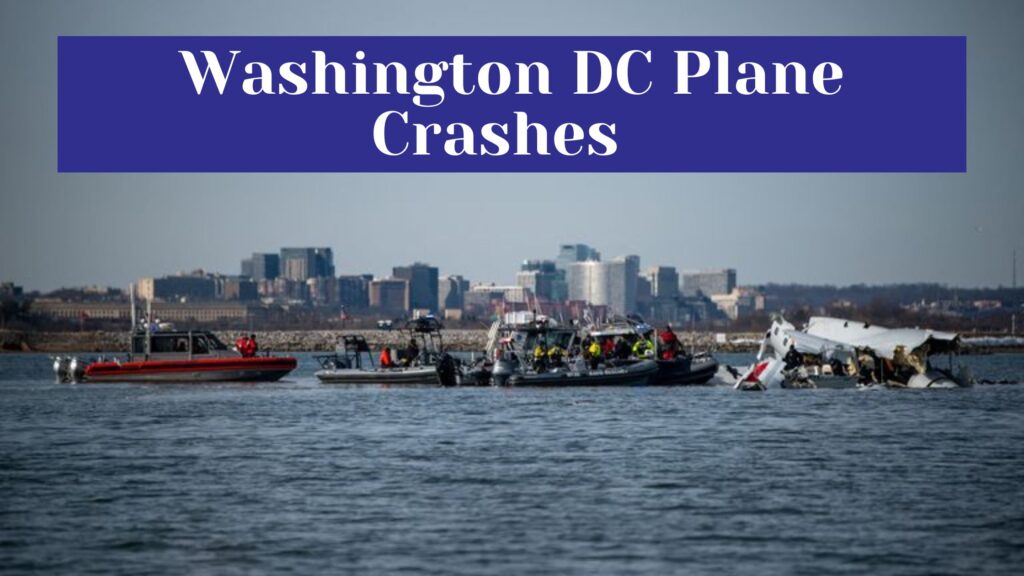
The devastating Washington DC plane crashes incident involving a commercial plane and a military helicopter near Ronald Reagan National Airport has left Washington, DC, in shock. As investigations unfold, key questions about air traffic control staffing, federal aviation policies, and the safety of U.S. airspace remain at the forefront.
The search for the plane crash DC passenger list and potential plane crash DC survivors continues, while political debates surrounding the tragedy intensify.
Washington DC Plane Crashes: What Happened?
On the evening of January 29, a passenger jet was on its final approach to Reagan National when it collided with a military helicopter. The impact resulted in a catastrophic crash into the Potomac River, leading to a significant loss of life.
The preliminary investigation suggests that the air traffic control tower was understaffed, with a single controller handling both airplane and helicopter traffic at the time of the crash.
Investigation Findings and Timeline of the Plane Crash DC
January 30, 12:30 a.m. EST
- The FAA’s preliminary report stated that the staffing at the air traffic control tower was “not normal.”
- However, a source cited by the Associated Press claimed staffing levels were appropriate.
- Reports indicate that a supervisor merged air traffic control duties before 9:30 p.m., allowing one controller to leave early.
Read more... DC Plane Crash Disaster
January 30, 11:30 p.m. EST
- The National Transportation Safety Board (NTSB) recovered the plane’s cockpit voice recorder and flight data recorder, which were sent for evaluation.
January 30, 5:40 p.m. EST
- Authorities recovered about 40 bodies from the Potomac River, believing that most remains had been retrieved.
- CBS News reported that further recovery efforts would resume the following day.
January 30, 5:15 p.m. EST
- Kansas Governor Laura Kelly stated that officials had not yet determined the full plane crash DC passenger list but were working to notify next of kin.
January 30, 2:15 p.m. EST
- An internal FAA report confirmed that one controller was handling both airplane and helicopter traffic, a job typically divided between two people.
January 30, 1:20 p.m. EST
- The U.S. Army confirmed that two pilots and a staff sergeant aboard the military helicopter were killed in the crash.
January 30, 7:45 a.m. EST
- Washington’s Fire and EMS Chief John Donnelly confirmed there were no plane crash DC survivors, shifting the operation from rescue to recovery.
- 27 of the 64 plane passengers and one helicopter crew member had been recovered by then.
Plane Crash DC Trump: Political Reactions and Controversy
The crash has ignited political debate, particularly concerning FAA policies. Former President Donald Trump suggested that diversity, equity, and inclusion (DEI) hiring practices within the FAA may have contributed to the accident, despite a lack of evidence.
Read more…. Mauni Amavasya 2025
January 30, 11:30 a.m. EST
- Trump announced an executive order ending DEI hiring practices in the FAA, claiming such policies compromised aviation safety.
- He stated, “Only naturally talented geniuses” would be hired under his administration.
January 30, 12:15 p.m. EST
- Former Transportation Secretary Pete Buttigieg called Trump’s remarks “despicable,” criticizing him for undermining FAA safety measures.
What’s Next in the Plane Crash DC Investigation?
- The NTSB is analyzing the black boxes for flight data insights.
- The FAA is facing scrutiny over its staffing decisions.
- The search for remaining bodies and aircraft parts continues.
- The full plane crash DC passenger list is expected to be released soon.
As Washington, DC, grapples with this tragedy, families await answers, and aviation experts push for changes to prevent future disasters. The devastating Washington DC plane crashes have raised questions about air safety, and the impact of political decisions on aviation regulations remains a contentious issue.