Distribution of Oceans and Continents: Theories & Geological Impact

The Distribution of Oceans and Continents is a dynamic and ever-changing process shaped by geological forces. Continents cover 29% of the Earth’s surface, while the rest is occupied by vast oceanic waters. However, the position of these landmasses has not always been the same. Over millions of years, continents have shifted due to powerful geological […]
Origin and Evolution of Earth: Understanding the Birth of Our Planet

Origin and Evolution of Earth is a fascinating subject that delves into the beginnings of our planet, tracing its journey from the formation of the universe to the development of life. In order to understand Earth, which is the prime focus of Geography as a discipline, we must first comprehend its origin. However, to achieve […]
Understanding the Interior of Earth: Layers, Processes, and Seismic Activities

The interior of Earth has long been a subject of study for geologists and seismologists. Earth is not a homogeneous solid ball; rather, it consists of different layers, each with distinct characteristics. Various processes occurring in Earth’s interior shape landforms, indirectly influencing human life. Studying the Earth’s interior is essential for understanding physiographic characteristics, endogenic […]
Longitude and Latitude: Understanding Earth’s Coordinates for UPSC
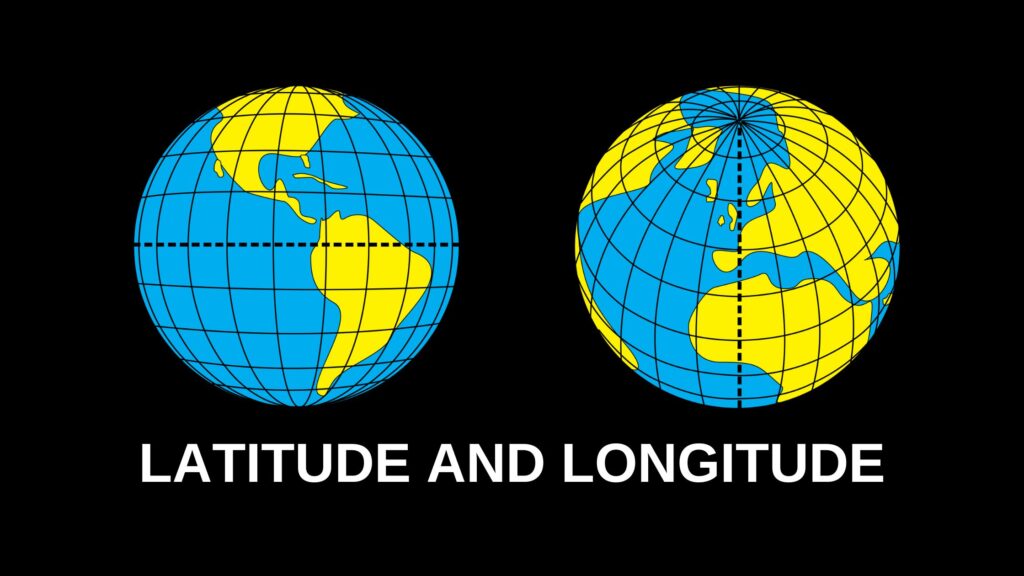
Geographical coordinates, namely Longitude and Latitude, help determine the exact location of any place on Earth. These are angular measurements, expressed in degrees, which uniquely define points on the planet. Download notes of Geography as a discipline UPSC Notes Latitude Latitude refers to the angular distance of a point north or south of the Equator. […]
Geography as a discipline UPSC Notes

Geography is a fascinating subject that helps us understand our planet and the way humans interact with it. The word “Geography” comes from the Greek words ‘Geo’ (Earth) and ‘Graphos’ (Description). In simple terms, it is the study of the Earth’s physical features and how humans influence and adapt to them. Did You Know? Eratosthenes, […]
Emergence of Communalism & Partition of India – Key Events & Factors

The partition of India in 1947 was a watershed moment in South Asian history, marking the culmination of communal tensions that had been brewing for decades. The Muslim League’s call for “direct action” on August 16, 1946, was a defining moment that set the stage for the violent events leading to the creation of Pakistan. […]
National Movements in Princely States of India – UPSC Notes & Analysis

The national movements in the princely states of British India played a crucial role in the country’s struggle for independence. These states were ruled by Indian princes but were under British suzerainty, meaning they had some autonomy but were still controlled by the British. The people in these states faced unique challenges, including heavy taxation, […]
Quit India Movement 1942: Causes, Impact & Key Facts for UPSC

The Quit India Movement, also known as the August Kranti, was a significant milestone in India’s struggle for independence. Launched in 1942 under the leadership of Mahatma Gandhi, it was a mass protest demanding an end to British rule in India. This movement played a crucial role in making India’s independence inevitable. Why Did the […]
World War 2 & India: Key Events & Responses

World War 2 began in September 1939 when Germany invaded Poland. Before this, Germany had already taken control of Austria in 1938 and Czechoslovakia in 1939. Initially, Britain and France tried to appease Hitler, but after the invasion of Poland, they declared war on Germany. The Two Sides of the World War 2 The war […]
Political Changes After Civil Disobedience Movement in India

After the Civil Disobedience Movement, India’s political landscape changed significantly, strengthening nationalist sentiments and forcing the British to reconsider their policies. Though the movement ended in 1934, it sparked debates within the Indian National Congress on whether to focus on village-based constructive work, engage in constitutional struggles, or adopt a radical socialist approach. This divide […]